D7 Visa or D8 Visa (Digital Nomad): Which One Is Better in Portugal? (2026 Guide)
If you are planning to move to Portugal, one of the first big decisions you will need to make is choosing the right visa – D7 visa or D8 visa?
Two of the most popular options for non-EU citizens are the D7 Visa and the Digital Nomad Visa (D8). Both allow you to live in Portugal, but they are designed for very different types of people and financial situations.
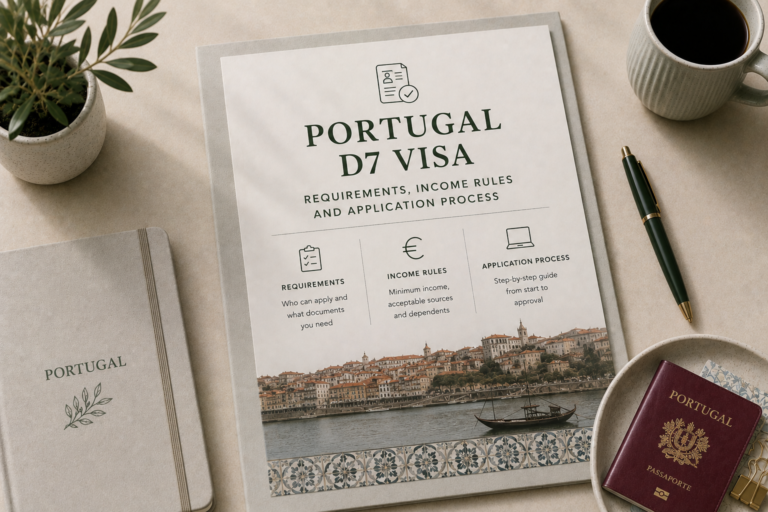
The D7 Visa is aimed at individuals with passive income, such as pensions, rental income, or investments. The Digital Nomad Visa, on the other hand, is designed for remote workers and freelancers who earn income from abroad.
Choosing the wrong visa can create unnecessary complications, so understanding the differences is essential before you apply. In this guide, we will break down both visas in detail so you can clearly understand which one is better for your situation in 2026.
What is the D7 visa in Portugal?
The D7 Visa is often called the “passive income visa” because it is designed for people who can support themselves without needing employment in Portugal.
This includes retirees, individuals with rental income, or people living off investments or savings. The key requirement is that your income is stable and predictable.
One of the main advantages of the D7 Visa is that it leads to residency in Portugal and can eventually lead to permanent residency or citizenship, making it very attractive for long-term relocation.
However, it is important to understand that the D7 Visa is not designed for active employment or remote work as a primary income source.
What is the Digital Nomad visa (D8) in Portugal?
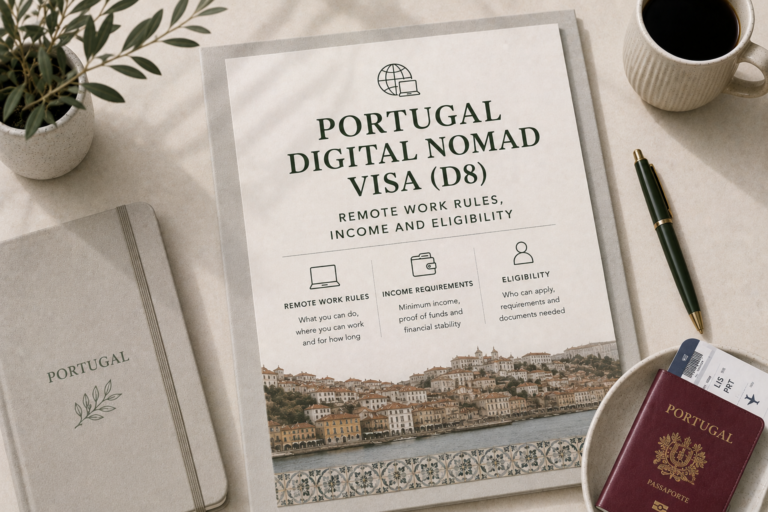
The Digital Nomad Visa, also known as the D8 Visa, was introduced to attract remote workers and digital professionals to Portugal.
This visa is designed for people who work for companies outside of Portugal or run freelance businesses remotely. Unlike the D7, your income must come from active work rather than passive sources.
The D8 Visa is ideal for freelancers, remote employees, and entrepreneurs who want to live in Portugal while continuing their international work.
It offers flexibility and is particularly popular among younger professionals and location-independent workers.
D7 Visa or D8 Visa: Key differences
Although both visas allow you to live in Portugal, the differences between them are important.
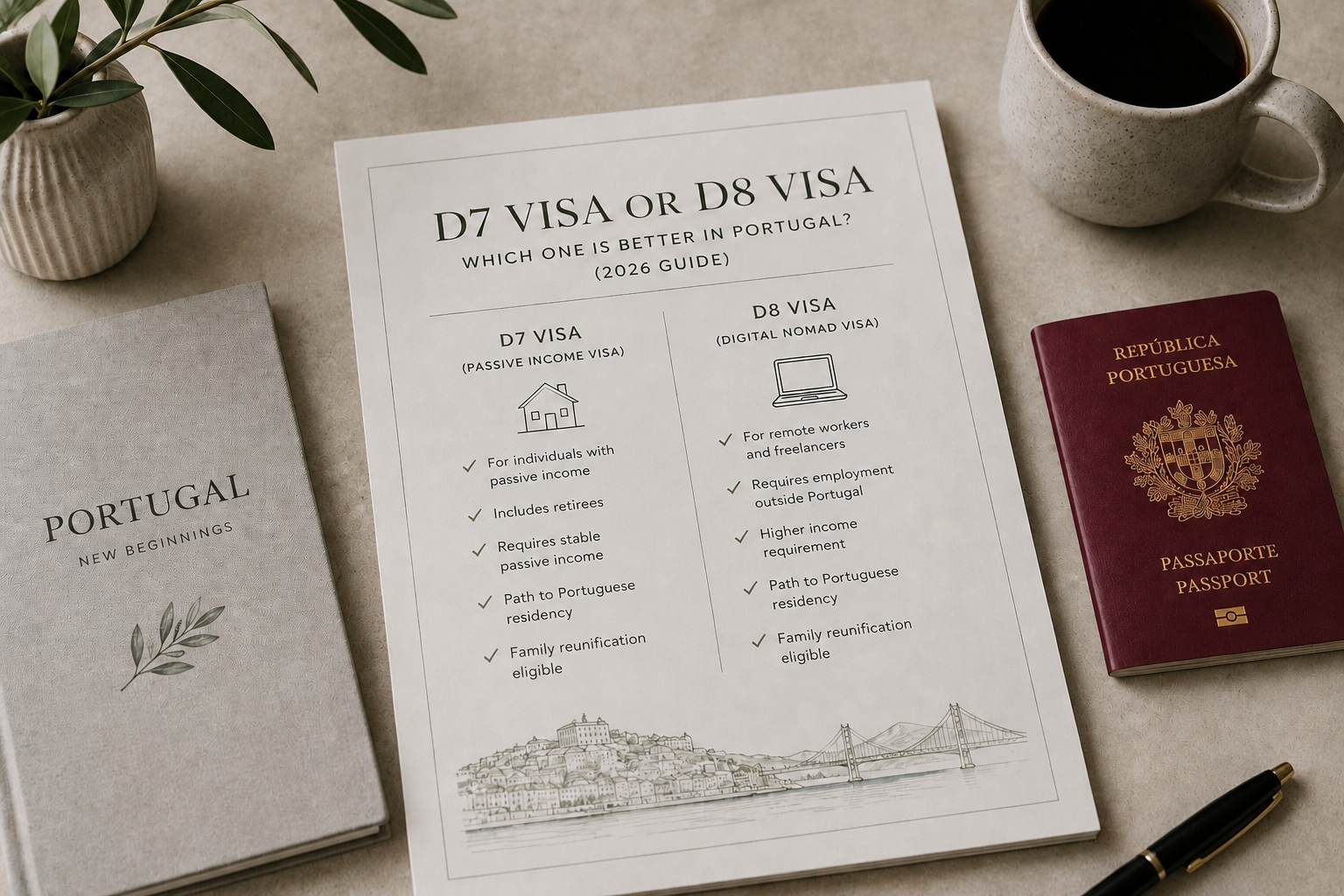
The D7 Visa is focused on financial stability through passive income, while the D8 Visa is based on active remote work.
Another key difference is lifestyle. The D7 Visa is better suited for people looking for a slower, more settled life in Portugal, while the D8 Visa suits those who want to continue working online and maintain a more flexible lifestyle.
Income requirements also differ. The D8 Visa generally requires higher monthly income proof compared to the D7, but both require financial stability.
| Feature | D7 Visa | D8 Visa |
| Income type | Passive income (pensions, rentals, savings) | Active remote income (job or freelance) |
| Best for | Retirees, long-term settlers | Remote workers, freelancers |
| Work allowed | Limited / not primary focus | Yes, remote work required |
| Lifestyle | Stable, slower pace | Flexible, mobile lifestyle |
| Income requirement | Lower, stable income | Higher monthly income |
| Proof needed | Savings / passive income sources | Employment contract or freelance proof |
| Long-term path | Residency → citizenship | Residency → citizenship |
| Flexibility | Lower | Higher |
Which visa is easier to get?
There is no universal answer, as it depends entirely on your financial situation.
If you have stable passive income, the D7 Visa is usually simpler and more straightforward. If you are a remote worker with consistent income, the D8 Visa is often the better fit.
In practice, both visas require documentation, proof of income, and financial stability, so preparation is key regardless of which route you choose.
Lifestyle comparison
The lifestyle difference between these visas is often what ultimately influences the decision.
With the D7 Visa, many people move to Portugal for retirement, long-term residency, or a slower lifestyle. It is often associated with stability and long-term settlement.
With the Digital Nomad Visa, the lifestyle is more dynamic. People continue working remotely, often traveling or moving between countries while based in Portugal.
Both lifestyles are very viable in Portugal, but they appeal to different types of expats.
Income requirements overview
While exact requirements can change, both visas require proof of sufficient monthly income.

The D7 Visa typically accepts lower but stable income, especially from pensions or long-term sources.
The D8 Visa usually requires higher monthly income, as it assumes active remote work.
In both cases, Portuguese authorities want to ensure that applicants can support themselves without relying on local employment.
Can you switch between D7 and D8 in Portugal?
In some cases, it is possible to transition between residence permits after arriving in Portugal, but this depends on your individual situation and immigration status.
For this reason, it is important to choose the visa that best matches your long-term plans from the beginning.
Official information about Portuguese visas can be found on government websites such as Agência para a Integração, Imigração e Asilo (AIMA).