

Buying Property in Portugal (2026): Costs, Taxes & Process for Expats
Buying property in Portugal has become one of the most popular long-term decisions for expats relocating to the country. The combination of lifestyle, safety, climate, and relatively competitive property prices (compared to other Western European countries) makes Portugal an attractive destination for both residents and investors.
However, while the market is accessible to foreigners, the buying process involves legal steps, taxes, and financial planning that are important to understand before committing.
This guide explains everything you need to know in 2026 about buying property in Portugal, including the full process, costs, taxes, and common pitfalls.
Why expats buy property in Portugal
Portugal continues to attract international buyers for a mix of lifestyle and investment reasons. Many expats initially arrive under visas such as the D7 Visa or Digital Nomad Visa and later decide to settle more permanently through property ownership.
The appeal of the market is not just price-related, but also lifestyle-driven. Some of the key reasons that lead expats to invest in Portuguese property are:
- Strong quality of life and safety
- Mild climate year-round
- Lower property prices compared to France, Spain (prime areas), or the UK
- High demand for rental properties in key cities
- Attractive coastal and countryside living options
- Good long-term market stability in major urban areas
Cities like Lisbon and Porto attract long-term renters and professionals, while the Algarve remains a strong tourism-driven market.
Can foreigners buy property in Portugal?
Yes. Portugal has no restrictions on foreign property ownership. This means that:
- EU and non-EU citizens can buy freely
- No residency is required to purchase property
- No citizenship is needed
- You can buy as an individual or through a company structure
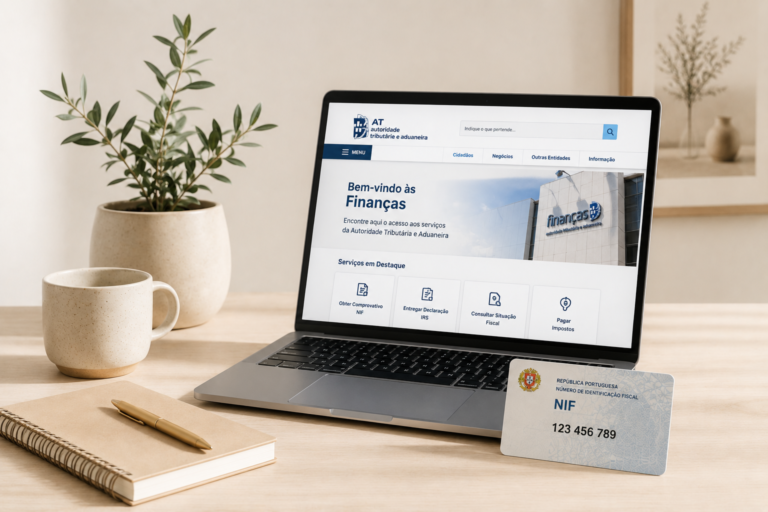
However, before purchasing, you must obtain a Portuguese tax number (NIF), which is essential for all legal and financial transactions in the country.

Step-by-step process of buying property in Portugal
The property purchase process in Portugal is structured and legally secure, but it follows several formal steps that must be completed in order.
1. Preparation (NIF & Bank Account)
Before viewing or offering on properties, expats should prepare the basics:
Without these, transactions cannot proceed smoothly.
2. Property search
Once prepared, buyers typically search through:
- Estate agents (local agencies)
- Online platforms
- Developer projects (new builds)
Popular areas include Lisbon, Porto, Algarve, Madeira, and emerging inland regions.
3. Legal due diligence
Hiring a lawyer is not mandatory but is strongly recommended. A lawyer will typically:
- Verify property ownership
- Check for debts or mortgages attached to the property
- Ensure building permits are valid
- Review contracts before signing
This step reduces legal risk significantly for foreign buyers.
4. Promissory contract (CPCV)
Once a property is chosen, both parties sign a promissory contract. At this stage:
- A deposit is usually paid (10%–30%)
- The sale becomes legally binding
- Penalties apply if either party withdraws
This contract secures the property while final steps are completed.
5. Final deed (escritura)
The final stage takes place in front of a notary. At this point:
- Remaining payment is completed
- Ownership is officially transferred
- Property is registered under the buyer’s name
From this moment, the buyer becomes the legal owner.
Costs of buying property in Portugal
The property price is not the full cost. Buyers should expect additional expenses that typically increase total cost by 6% to 10%.
Main costs include:
- IMT (Property Transfer Tax): varies by price and property type
- Stamp Duty: 0.8% of purchase price
- Legal fees: ~1% to 2%
- Notary and registration fees: €500–€1,000+
Example breakdown:
- Property price: €300,000
- Additional costs: €18,000 – €30,000
- Total cost: €318,000 – €330,000
Taxes on property ownership
IMI (Annual Property Tax)
Once you own property, you must pay annual municipal tax.
- Typically 0.3% to 0.8%
- Based on property tax value (not market value)
- Paid annually or in instalments
Rental income tax
If you rent out your property:
- Rental income is taxed in Portugal
- Rates depend on residency status and structure
- Expenses may sometimes be deductible
Official information about living in Portugal for European Union citizens
Mortgages for expats in Portugal
Expats can access mortgages, but conditions are stricter than for residents. Typical requirements include:
- Deposit of 20%–40%
- Proof of income and employment
- Credit history review
- Portuguese NIF and bank account
Banks assess affordability carefully, especially for non-residents.
Common mistakes expats make
Many issues arise when buyers rush into the process without full preparation. Common mistakes include:
- Not accounting for taxes and fees in the total budget
- Skipping legal due diligence
- Buying in overly tourist-driven areas without long-term strategy
- Assuming rental income will always be high
- Not comparing mortgage offers across banks
Taking time to understand the system reduces risk significantly.

Is buying property in Portugal a good investment?
The answer depends heavily on location and strategy.
Strong performing areas:
- Lisbon: high demand, strong capital growth
- Porto: growing international interest
- Algarve: tourism-driven rental income
More affordable regions:
- Inland Portugal
- Smaller coastal towns
- Emerging secondary cities
Overall, Portugal remains attractive due to stable demand, expat inflows, and tourism-driven rental markets.
Final Thoughts
Buying property in Portugal in 2026 is a structured and secure process, but it requires preparation and an understanding of taxes, legal steps, and total costs.
For expats who take a strategic approach, Portugal offers both a high quality of life and strong long-term property opportunities.
FAQ
Can foreigners buy property in Portugal?
Yes. There are no restrictions on foreign property ownership in Portugal. Expats from the EU, UK, US, and other countries can freely buy property without needing residency or citizenship. However, a Portuguese tax number (NIF) is required before any purchase can be completed.
Do I need to be a resident to buy property in Portugal?
No. You do not need residency to buy property in Portugal. Many buyers purchase property while still living abroad. However, residency can make it easier to access mortgages and manage utilities or tax obligations locally.
What is the minimum cost of buying property in Portugal?
There is no fixed minimum property price, but buyers should budget an additional 6% to 10% on top of the purchase price to cover taxes and fees. This includes IMT (property transfer tax), stamp duty, legal fees, and notary costs.
What taxes do I pay when buying property in Portugal?
When purchasing property, you typically pay IMT (Property Transfer Tax) and stamp duty. After purchase, owners must also pay an annual property tax called IMI, which is calculated based on the property’s taxable value.
Can expats get a mortgage in Portugal?
Yes. Expats can apply for mortgages in Portugal, although conditions are stricter than for residents. Most banks require a deposit of 20% to 40%, proof of income, and a Portuguese bank account. Approval depends on financial profile and risk assessment.
Is buying property in Portugal a good investment in 2026?
It can be, depending on location and strategy. Lisbon and Porto offer strong demand and capital appreciation, while the Algarve performs well for tourism rentals. More rural areas offer lower entry prices but slower growth.
What is the biggest mistake expats make when buying property in Portugal?
The most common mistake is underestimating total costs and skipping legal due diligence. Expats sometimes focus only on the purchase price without accounting for taxes, fees, and long-term maintenance costs.
How long does it take to buy property in Portugal?
The process typically takes between a few weeks and a few months, depending on financing, legal checks, and negotiation. Having all documents ready (especially NIF and bank account) significantly speeds up the process.




One Comment