
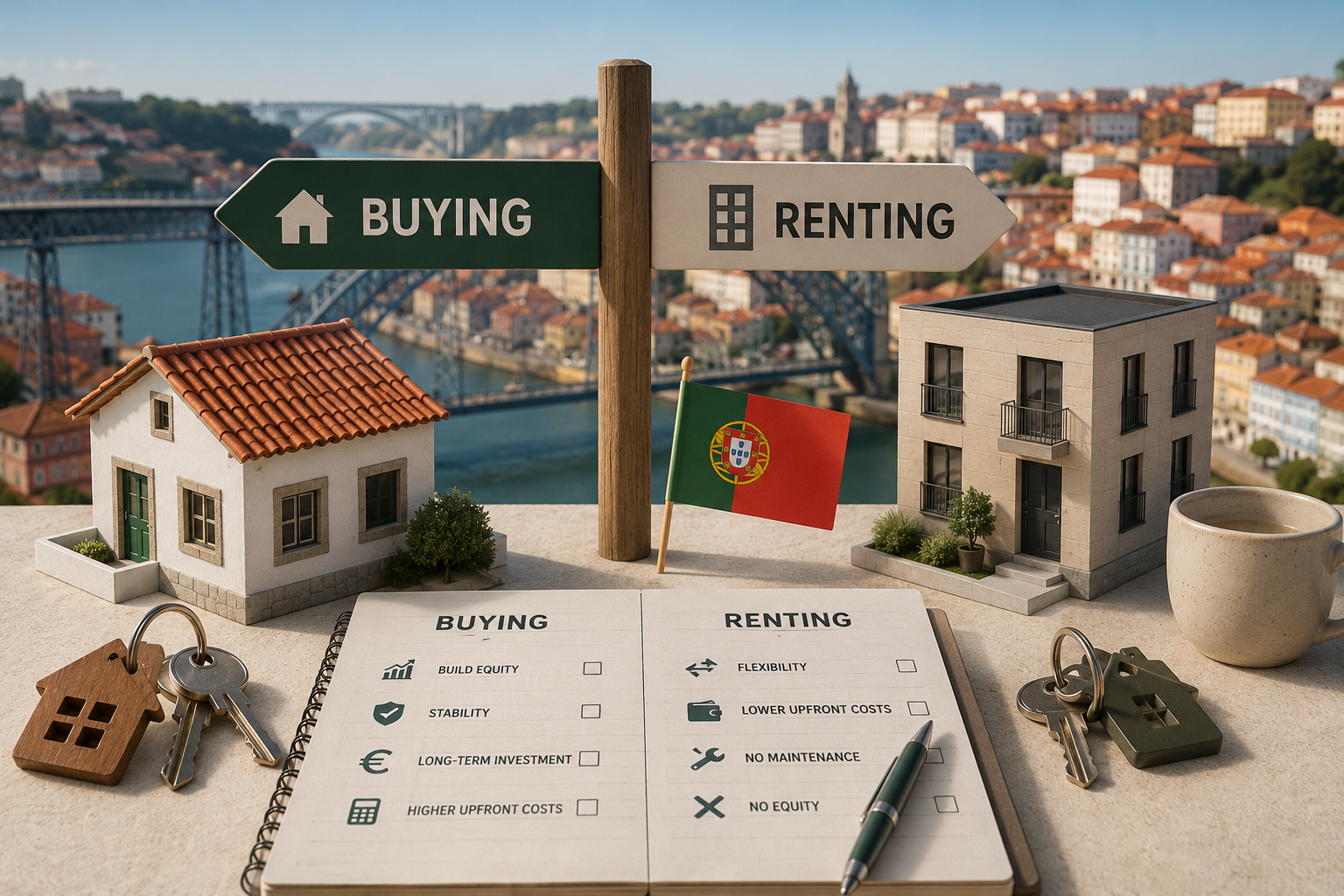
Buying vs Renting in Portugal (2026): Which Makes More Sense for Expats?
Buying or renting in Portugal is one of the major questions when moving to the country.
For many expats, buying a home in Portugal is part of the dream. A coastal apartment in the Algarve, a restored townhouse in Porto, or a countryside home in Central Portugal can all sound very attractive. But buying property is a major financial decision, especially if you are still getting used to a new country, a new legal system, and a new property market.
Renting, on the other hand, offers flexibility. It gives you time to understand different cities, neighbourhoods, transport links, lifestyle costs, and whether Portugal is truly the right long-term move for you.
This guide compares buying vs renting in Portugal in 2026, including costs, flexibility, taxes, mortgages, lifestyle factors, and what usually makes more sense for expats.
Should you buy or rent in Portugal?
There is no single answer. The right choice depends on your personal situation, budget, and long-term plans.
Buying can make sense if you are confident about where you want to live, have savings for the upfront costs, and plan to stay in Portugal for several years. Renting may be better if you have just arrived, are still exploring different regions, or want to avoid committing too soon.
The decision usually depends on:
- How long you plan to stay in Portugal.
- Whether you know which city or region suits you.
- Your available savings.
- Whether you need a mortgage.
- Your tolerance for maintenance and ownership costs.
- Whether flexibility or stability matters more to you.
For many newcomers, renting first is the safer option. It allows you to understand the market before making a major purchase.
Renting in Portugal
Renting is often the easiest way to settle into Portugal during your first months in the country. It gives you flexibility while you explore different areas and adjust to everyday life.
This is especially useful because Portugal varies significantly by location. Living in central Lisbon is very different from living in Cascais, Porto, the Algarve, Braga, Coimbra, or a smaller inland town.
Renting is usually better if you:
- Have just arrived in Portugal
- Are not sure where you want to live long term
- Want flexibility before committing
- Need time to understand local property prices
- Are moving for work, study, or a temporary visa
- Want to avoid high upfront purchase costs
The downside is that rental markets in popular areas can be competitive. Lisbon, Porto, Cascais, and parts of the Algarve can be expensive, especially for modern apartments in good locations.
Buying property in Portugal
Buying property can be an excellent option for expats who are committed to living in Portugal long term. It offers stability, control, and the possibility of building equity over time. Instead of paying rent every month, you may be paying towards an asset that you own.
Buying may make more sense if you:
- Plan to stay in Portugal for several years.
- Have already chosen the right city or region.
- Have savings for a deposit and purchase costs.
- Want long-term stability.
- Are comfortable with taxes, maintenance, and ownership responsibilities.
- Want to renovate or personalise your home.
However, buying should not be rushed. Property transactions involve legal checks, taxes, notary costs, mortgage conditions, and sometimes renovation risks. Expats should take time to understand the full process before making an offer.

Cost comparison: buying vs renting in Portugal
The biggest difference between buying and renting is the upfront cost.
Renting usually requires a deposit and one or more months of rent in advance. Buying requires a much larger cash commitment, including a deposit, taxes, legal fees, and transaction costs.
| Factor | Renting | Buying |
| Upfront cost | Lower | Higher |
| Monthly payment | Rent | Mortgage or no payment if bought outright |
| Flexibility | High | Lower |
| Maintenance | Usually landlord | Owner |
| Property taxes | No | Yes |
| Long-term stability | Lower | Higher |
| Ability to personalise | Limited | High |
| Builds equity | No | Yes |
Renting is usually easier in the short term. Buying may be more attractive in the long term, but only if you stay long enough to justify the transaction costs.
Upfront costs
Renting in Portugal usually involves paying a deposit and rent in advance. The amount varies depending on the landlord, property, and city, but it is usually far lower than the amount required to buy.
Buying property requires significantly more cash. Buyers should budget for:
- Deposit.
- IMT property transfer tax.
- Stamp duty.
- Notary fees.
- Legal fees.
- Mortgage-related costs, if applicable.
- Survey or valuation costs.
- Furniture and moving expenses.
This is why buying can be financially difficult for newcomers, even if monthly mortgage payments look similar to rent.
Monthly costs
Renting gives you a predictable monthly cost, although rent increases may apply depending on the contract. In many cases, the landlord remains responsible for structural maintenance and major repairs.
Buying can also offer predictable monthly payments if you have a fixed-rate mortgage, but owners must budget for additional costs.
These may include:
- Mortgage payments
- Condominium fees
- Annual property tax
- Insurance
- Maintenance
- Repairs
- Utilities
- Renovation work
This is why comparing rent and mortgage payments alone can be misleading. Ownership usually comes with extra responsibilities.
Flexibility vs stability
Renting offers flexibility. If you realise a neighbourhood is not right for you, you can move at the end of your contract. This is especially valuable during your first year in Portugal.
Buying offers stability. You do not need to worry about landlords ending contracts, rental increases, or finding a new home. You can also renovate, decorate, and adapt the property to your lifestyle.
- Renting is usually better for flexibility.
- Buying is usually better for stability.
The question is which one matters more to you at this stage of your move.

Buying vs renting by location
The decision can vary significantly depending on where you live in Portugal.
Lisbon
Lisbon has the highest housing costs in the country. Buying can be expensive, and rental demand is strong. Many expats choose to rent first while they decide whether central Lisbon, nearby areas such as Cascais or Oeiras, or more affordable suburbs make more sense.
Porto
Porto is generally more affordable than Lisbon, although prices have increased in recent years. Buying may be attractive for long-term residents, but renting first still helps you understand the city’s different neighbourhoods.
Algarve
The Algarve is popular with retirees, lifestyle buyers, and second-home owners. Buying can make sense if you are certain you want to stay long term, but seasonal demand and location differences are important. Living in Lagos, Faro, Tavira, or Vilamoura can feel very different.
Smaller towns
In smaller towns and inland areas, buying can be significantly more affordable. However, liquidity may be lower, meaning it could take longer to sell the property later.
When should expats rent first?
For most expats, renting first is the safest approach. Even if you eventually want to buy, renting for 6–12 months can help you make a better decision.
It gives you time to:
- Understand different regions.
- Compare neighbourhoods.
- Learn how the property market works.
- Check transport links and daily routines.
- Understand local costs.
- Avoid buying too quickly.
- Decide whether Portugal is right for you long term.
This is particularly important if you are moving with family, working remotely, retiring, or choosing between several regions.
When buying makes more sense
Buying can make more sense once you feel confident about your plans. This is especially true if you know where you want to live, have stable finances, and plan to remain in Portugal long term.
Buying may be the better option if:
- You plan to stay for at least several years.
- You have found a location you genuinely like.
- You understand the local market.
- You can afford purchase taxes and fees.
- You want long-term housing security.
- You are comfortable managing maintenance.
For retirees and long-term residents, buying can provide peace of mind and protection against rising rents.
Pros and cons of renting in Portugal
Pros
- Lower upfront costs.
- More flexibility.
- Easier for new arrivals.
- Less responsibility for maintenance.
- Useful while exploring different regions.
Cons
- No equity built.
- Possible rent increases.
- Less control over the property.
- Competitive rental markets in popular cities.
- Contracts may not always offer long-term security.
Pros and cons of buying in Portugal
Pros
- Long-term stability.
- Builds equity.
- Ability to renovate and personalise.
- Protection from rent increases.
- Potential long-term capital appreciation.
Cons
- High upfront costs.
- Taxes and legal fees.
- Maintenance responsibility.
- Less flexibility.
- Selling can take time.

Public transport, lifestyle, and daily life
Housing decisions are not only financial. Lifestyle matters too.
If you live in central Lisbon or Porto, renting may be attractive because you can test different neighbourhoods without committing. Public transport is good, and you may not need a car.
In rural areas or parts of the Algarve, buying may feel more natural if you want a quieter lifestyle, outdoor space, or a permanent home.
Before deciding, consider:
- Do you need a car?
- Are shops and healthcare nearby?
- Is the area lively year-round?
- Are there schools nearby?
- Is the property easy to resell?
- Are utility costs manageable?
Final thoughts
Buying vs renting in Portugal depends on timing, lifestyle, and confidence.
If you are new to Portugal, renting first is usually the smarter choice. It gives you time to understand where you want to live, how much things really cost, and whether your chosen area suits your day-to-day life.
Buying can be a very good decision once you are confident about your long-term plans. It offers stability, control, and the possibility of building equity. However, it also requires careful planning, legal checks, and a realistic understanding of taxes and maintenance costs.
For most expats, the best strategy is simple: rent first, learn the market, then buy when you are sure.
FAQ
Is it better to buy or rent in Portugal?
It depends on your plans. Renting is usually better for flexibility, while buying may make more sense if you plan to stay long term.
Should expats rent first in Portugal?
Yes, in many cases. Renting for 6–12 months gives expats time to understand the market and choose the right location.
Is buying property in Portugal a good idea?
Buying can be a good idea for long-term residents with stable finances, but it should not be rushed.
Can foreigners buy property in Portugal?
Yes. Foreigners can buy property in Portugal, although they should understand taxes, legal steps, and financing options.
Is renting expensive in Portugal?
Renting can be expensive in Lisbon, Porto, Cascais, and popular Algarve locations, but smaller cities and inland areas are often more affordable.
Can foreigners get a mortgage in Portugal?
Yes. Many Portuguese banks offer mortgages to foreign buyers, although deposit requirements and lending conditions vary.
How long should I rent before buying in Portugal?
Many expats rent for 6–12 months before buying. This gives them time to compare areas and avoid making a rushed decision.




One Comment