Portugal D7 Visa (2026): Requirements, Income Rules & Application Process
The Portugal D7 Visa is one of the most popular residency options for non-EU citizens who want to move to Portugal using passive income. It is designed for retirees, remote investors, and individuals who have stable income streams without needing local employment.
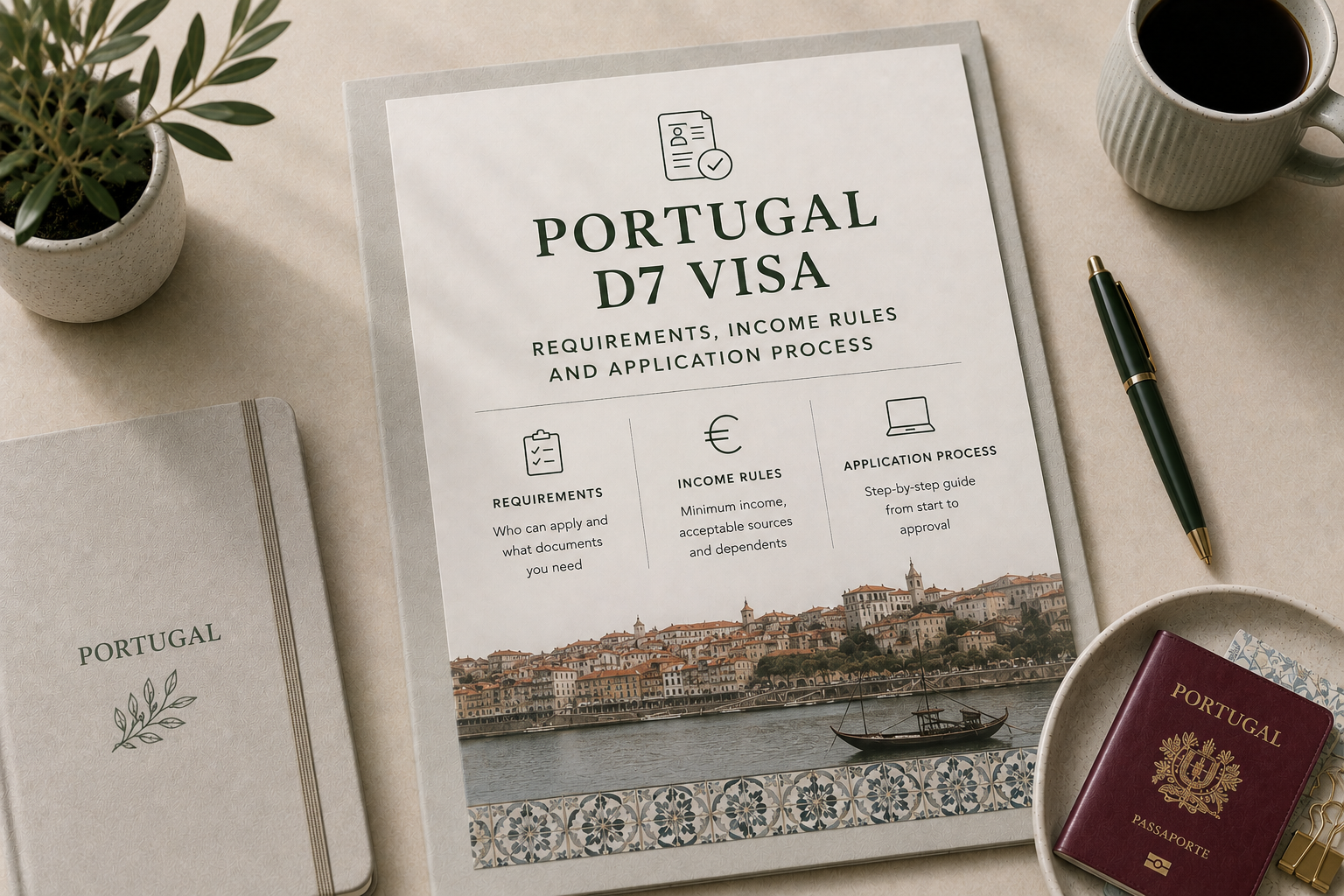
This guide explains everything you need to know about the Portugal D7 Visa in 2026, including requirements, income rules, application process, timeline, and practical tips to increase your chances of approval.
What is the Portugal D7 Visa?
The Portugal D7 Visa is a long-term residency visa that allows non-EU citizens to live in Portugal if they can prove sufficient passive income. This income can come from:
- Pensions
- Rental properties
- Dividends
- Financial investments
- Royalties
It is one of the most accessible residency pathways in Europe for financially independent individuals. Once approved, the visa allows you to:
- Live legally in Portugal
- Travel within the Schengen Area
- Apply for permanent residency after 5 years
- Potentially apply for Portuguese citizenship

Portugal D7 Visa Income Requirement (2026)
To qualify for the D7 Visa, applicants must demonstrate stable and recurring passive income.
Typical income thresholds:
- Main applicant: around €820–€1,000/month minimum
- Spouse: additional ~50%
- Child/dependent: additional ~30% each
These values are based on the Portuguese minimum wage and may vary slightly depending on the consulate.
Acceptable income sources:
- Pension income
- Rental income
- Investment dividends
- Savings interest
- Royalties
Important:
The key requirement is stability, not just amount. Authorities want to see that your income is consistent and reliable over time.
Accommodation requirement
Before applying, you must show proof of accommodation in Portugal. This can include:
- Rental contract (preferred)
- Property ownership
- Long-term Airbnb or lease agreement
Short-term bookings are usually not accepted for visa approval.
Required documents for D7 Visa
Applicants must prepare a complete set of documents, including:
Personal documents:
- Valid passport
- Passport photos
- Birth certificate (sometimes required)
Financial documents:
- Bank statements (3–6 months)
- Proof of passive income
- Tax returns (if applicable)
Legal documents:
- Clean criminal record certificate
Other requirements:
- Portuguese NIF (tax number)
- Proof of accommodation
- Private health insurance

Step-by-step application process
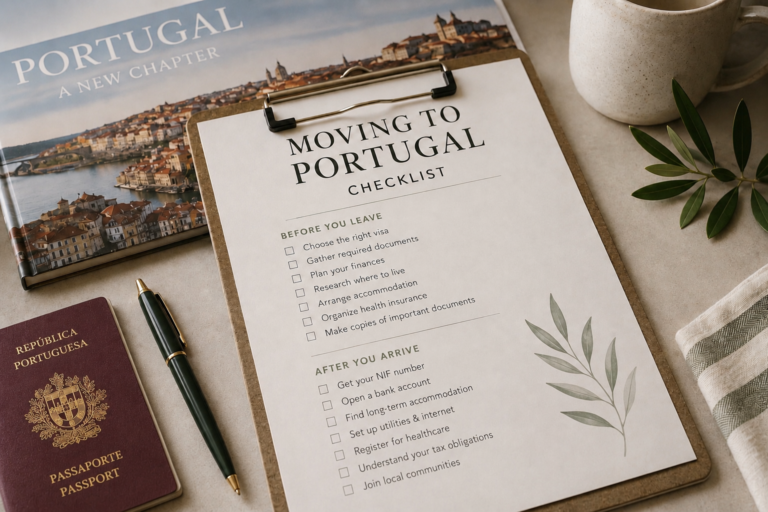
Step 1: Prepare documents
Gather all financial, legal, and personal documents.
Step 2: Get your NIF
The Portuguese tax number is required for almost everything in Portugal.
Step 3: Open a Portuguese bank account
You will likely need this to demonstrate financial ties.
Step 4: Apply at Portuguese consulate
Submit your application in your country of residence.
Step 5: Wait for approval
Processing usually takes 2 to 4 months depending on the consulate.
Step 6: Travel to Portugal
Once approved, you can enter Portugal with your visa.
Step 7: Register with AIMA
After arrival, you must register your residency and obtain your residence permit.
Portugal D7 Visa timeline
| Stage | Timeframe |
| Document preparation | 2–4 weeks |
| Consulate application | 4–8 weeks |
| Visa approval | 1–3 months |
| Travel to Portugal | After approval |
| Residence permit (AIMA) | After arrival |
Common mistakes that lead to rejection
Many applications are rejected due to avoidable errors:
- Insufficient or unclear income proof
- Short-term accommodation bookings
- Missing bank statements
- Inconsistent financial records
- Incomplete application forms
Life in Portugal on a D7 Visa
Once you move to Portugal, you can enjoy:
- High quality of life
- Affordable living compared to Western Europe
- Warm climate and coastal lifestyle
- Strong expat communities
Portugal D7 Visa vs Digital Nomad Visa
| Feature | D7 Visa | Digital Nomad Visa |
| Income type | Passive income | Remote employment |
| Minimum income | Lower | Higher |
| Ideal for | Retirees / investors | Remote workers |
| Flexibility | Residency-focused | Work-focused |
FAQ
If you stay in Portugal more than 183 days per year, you may become a tax resident.
What is the Portugal D7 Visa?
The D7 Visa is a residency visa for non-EU citizens with stable passive income who want to live in Portugal.
How much income do I need for the D7 Visa?
Typically around €820–€1,000 per month for the main applicant, with additional amounts for dependents.
Can I bring my family?
Yes, family reunification is allowed for spouses and dependents.
How long does the D7 Visa take?
On average, 2 to 4 months depending on the consulate.
Is the D7 Visa a path to citizenship?
Yes, after 5 years of legal residency, you may apply for permanent residency or citizenship.
Do I need to live full-time in Portugal?
Yes, you are generally expected to maintain residence in Portugal and meet residency requirements.